Some Things Stay
By ZealZag TeamThe legacy of a sculptor, the soul of a cyclist, and the journey that turned Miguel Solís into a voice for safer roads.
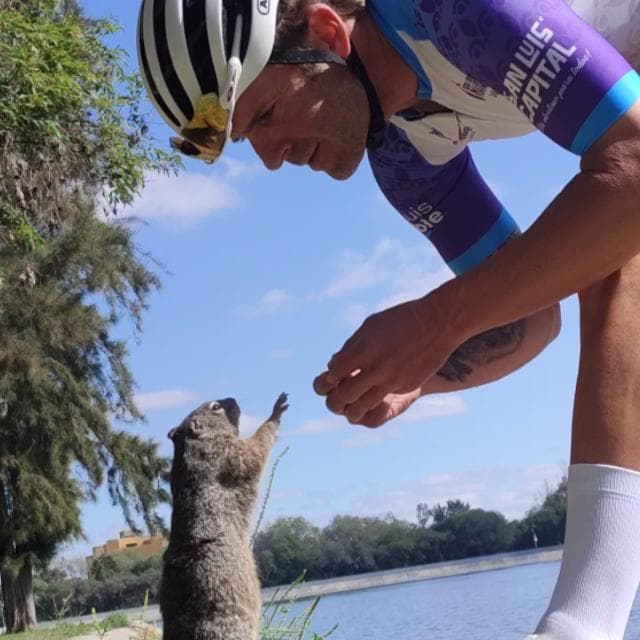
“When you overtake a cyclist, you are not overtaking an obstacle. You are overtaking a life.” — Miguel Solís
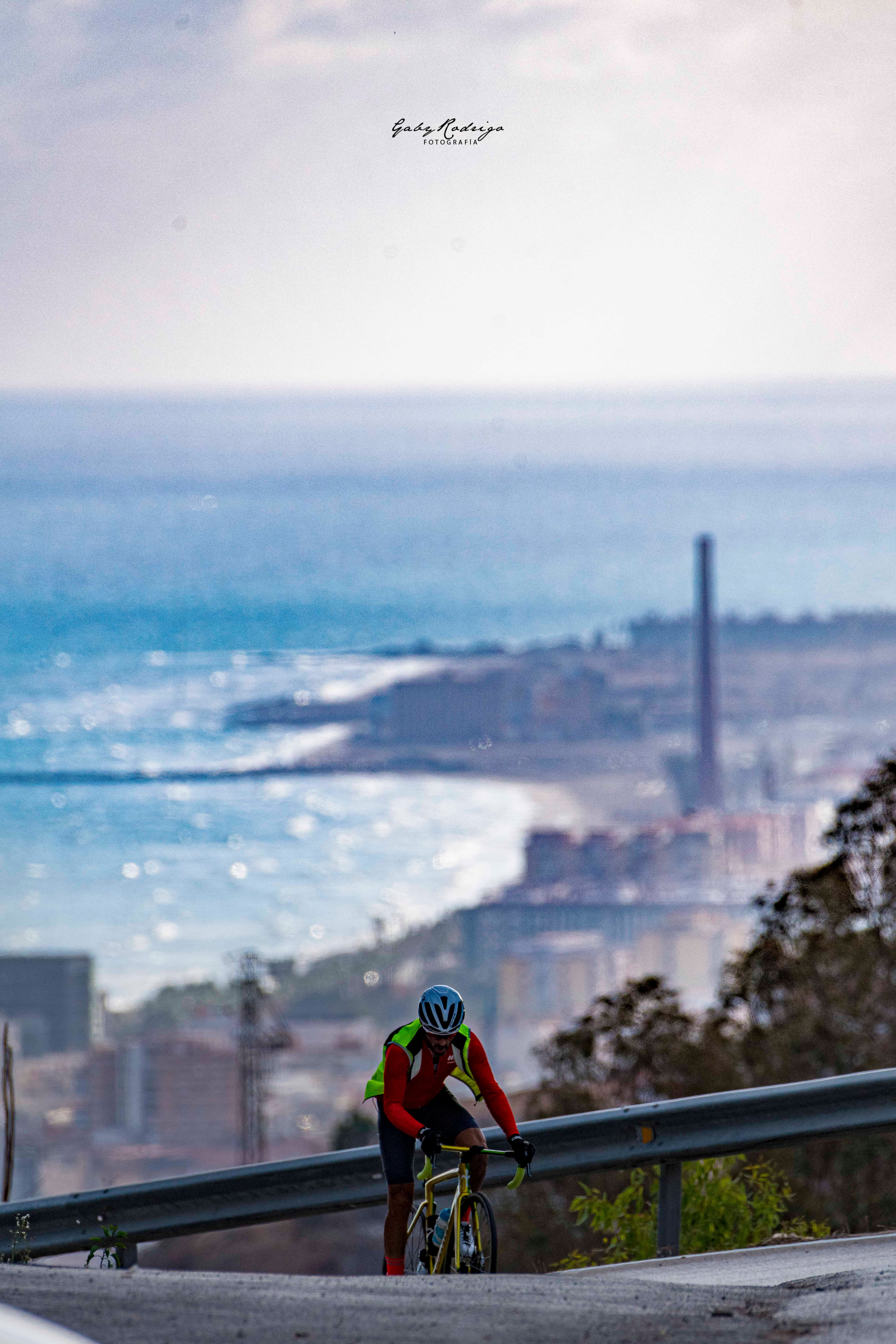
Every year on the 28th of February, the Day of Andalusia, a father took his son up the mountain to watch the cyclists go by. They lived in the Fuente Olletas neighborhood, at the foot of the road that climbs out of Málaga toward the Montes de Málaga Natural Park, toward a fountain at 900 meters above sea level where the city and the sea and the whole curved coastline of Andalusia spread out below. The road had once been the main access to Málaga from the interior of the peninsula — the same road Queen Isabel la Católica traveled in 1487 to meet her husband King Fernando, whose troops had the city under siege. Now, every February 28th, it became a race course. The boy watched everything. The cyclists arriving with their equipment, their shaved legs, their race numbers. The rollers, the warm-up rituals, the particular electricity that exists in the minutes before a race begins. His father stood beside him, speaking with the people around them with the easy warmth of a man who could talk to anyone. The father was a sculptor and restorer — a man who worked with wood and stone and patient hands, who knew that beauty requires time and attention and a deep respect for what already exists. Standing on that road, watching those cyclists disappear upward into the Montes de Málaga, something was forming in the boy that neither of them could see clearly yet. He had no idea that road would keep calling him back for the rest of his life.
A BICYCLE PAID FOR IN SCULPTURE
He grew up in the streets around the Cathedral of Málaga, in a neighborhood shaped by art and history and a particular malagueño way of understanding life as something to be lived slowly and with attention. His father’s workshop was a world of tools and clay and restoration — objects that arrived broken and left whole again, or as close to whole as hands and knowledge and time could make them. Miguel studied Fine Arts. He worked alongside his father restoring art inside the Cathedral of Málaga. Before long he was racing at a level that eventually led him to compete with Caja Rural, one of Spain’s best-known cycling teams. In his world, art and cycling were never separate threads. They were always the same one. The bicycle arrived the way important things usually do — sideways, through people rather than plans. A neighbor who was a cyclist, always impeccably turned out, always speaking about equipment and training and races in a way that made a young man pay close attention. A school friend named Raúl, whose mountain bike Miguel borrowed when Raúl upgraded to a new one. A father who bought a touring bicycle, used it very little, and eventually passed it on to his son. When the borrowed machines could no longer match the intensity with which he wanted to ride, Miguel went to Ciclos Gaona, a bicycle shop in the center of Málaga, with his father. The bicycle he wanted was expensive. He didn’t have enough money. But the owner of the shop, Salvador, was in love with a carved wooden horse’s head displayed in a decoration store on Calle Larios, where some of his father’s sculptures were sold. When Salvador discovered who had made it, a conversation began. An agreement was reached. Part of Miguel’s first real racing bicycle was paid for with a sculpture carved by his father’s hands. He was studying Fine Arts. He was restoring medieval stone inside Málaga’s cathedral. He was training every spare hour on the roads above his city. And the bicycle itself was partly a work of art. What he was discovering, in those early years of serious riding, was something that has never left him. He would climb out of the city, up through the Montes de Málaga, until the road crested and the whole bay opened below him. Down there were the traffic and the noise and the obligations of ordinary life. Up here, for a moment, he was outside all of it. He felt the air on his face — the cold, the heat, the wind, the rain, directly, without anything in between. He felt, he says, as if he could look at life from the outside.
“The bicycle was freedom. Perspective. A way of connecting with myself, with Málaga, with nature, and with my own history.”
He didn’t need anything else.
THE RACE
In the Axarquía region of Málaga, about thirty kilometers east of the city, there is a mountain bike race called the Desafío del Buda. Seventy kilometers through the landscapes of the comarca — through mango groves and avocado plantations and olive trees, climbing past the Buddhist temple of Karma Guen that gives the race its name, starting and finishing at the Mediterranean coast in Torre del Mar. It is one of the classic races on the Andalusian calendar, the kind of race where the terrain is so varied and the atmosphere so particular that riders return year after year. Miguel was racing the Desafío del Buda when it happened. He was a few kilometers from the finish when the crash came. He sat up and began the inventory that cyclists know: blood on the knees, a hard impact to the elbow, cuts and grazes. Then he looked at his left shoulder. His shoulder was visibly dislocated. He felt the fear arrive. But he also felt something else: where he had fallen, there was no one. There was no way to call for help. The saddle was broken. He could not sit. So he did the only thing that made any practical sense: he got back on the bicycle. The last kilometers of the Desafío del Buda ran along the dry bed of a river. With the saddle broken, Miguel could not sit. He rode standing on the pedals, his full weight distributed through his arms and his hands, through a shoulder and a collarbone that were broken. Every bump in the riverbed sent flashes of white through his vision. He did not describe it later as heroism. He described it as the most direct route to the ambulance. He crossed the finish line. Only then did the race end. He had won.
THE ROADS THAT DO NOT END AT A FINISH LINE
Not every journey Miguel has had to finish was marked on a race map. Some had no route. No distance. No time limit. Just the slow, uncertain work of getting back to something that had been taken away. In June 2020, Miguel was training when a vehicle struck him from behind and left him in the ditch, face down, unconscious. He did not know for some time what had happened. He lay there until a man who had been a customer in his bicycle shop happened to pass, recognized the bicycle lying in the road, turned around, and found him. That man called the ambulance and the Guardia Civil and stayed beside him without leaving. Miguel calls him his guardian angel. He will never know what would have happened otherwise. The injuries were serious. Fractured vertebrae, and much else. When he woke in the hospital he could barely move. Nurses held his hand and told him he would be alright, and he wept — not only from pain, but from the overwhelming sensation of being held when he could not hold himself. His sister came and took his hand and he wept again. What frightened him most was not dying. It was his mother. He thought of her constantly, and with those thoughts came the fear that his helplessness would become her burden. When you lose your autonomy, he says, you don’t suffer only for yourself. You suffer for the weight you might place on the people who love you. The victories of that recovery had nothing to do with bicycles. The day he could shower alone. The day he could walk to the bathroom without assistance. And then, one afternoon, his sister came to take him to a medical appointment. He made his way downstairs slowly, leaning on a walker, and stepped out onto the street. He stopped without realizing it. The sun was on his face. A small breeze moved. His sister was pulling the car around and glanced at him across the street, understanding immediately what was happening.
It can sound very simple. But it wasn’t simple at all. We say many times that the important things in life are the basic ones. Until something breaks you completely, you don’t know how true that is. That afternoon he understood what it meant to be standing up, to be outside, to feel the air, to still be here. As soon as he could reach his phone, he began searching for a new helmet. New shoes. Parts for his bicycle. Not as a declaration. Simply as the only language he had for saying he was going to come back. In 2022, it happened again. Another vehicle. Another impact. Another near-death on a road he had been training on peacefully, as he had done thousands of times before. Two accidents. Fractured vertebrae, clavicles, ribs, scapulae. An accumulation of injuries he has almost lost count of. And each time, the same quiet insistence: the search for new parts. The preparation to return. He does not romanticize any of it. Pain hurts, he says. There are days when the right decision is to turn around. There are days when the body simply isn’t ready and you have to respect that. Resilience, for Miguel, is not always pushing through. Sometimes it is knowing that today is not the day, and coming back tomorrow with more clarity.
A CAUSE
At some point after the second accident, something shifted in Miguel that went beyond recovery. He had been hit twice. He had lost count of the fractures. He had lain face down in ditches on roads where he had every legal right to be. And he understood, with a clarity that pain sometimes brings, that staying silent was no longer an option.
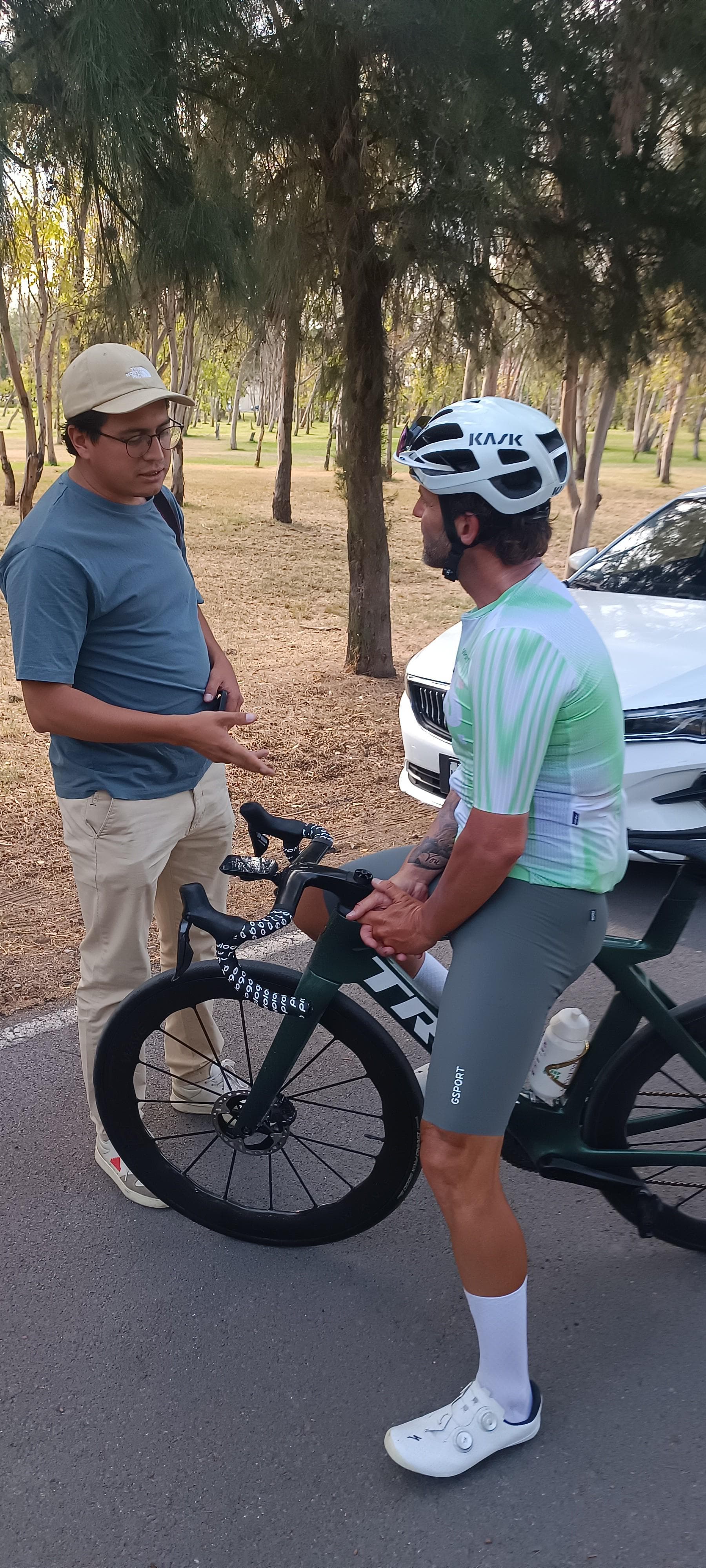
“If you witness an injustice every day and say nothing, you become part of that silence. From that moment on, I decided to transform that experience into a cause."
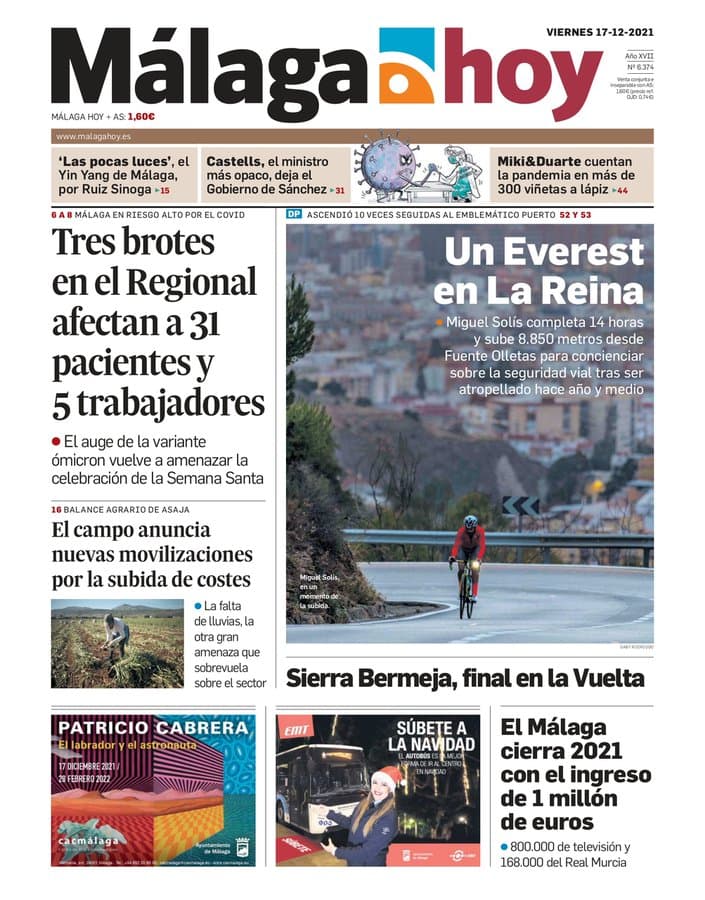
Not a conflict. He has never wanted to set cyclists against drivers. That division, he says, is absurd — because most people are both. One day you drive, the next you ride. The road belongs to everyone, and everyone carries responsibility on it. What he wanted was something simpler and harder: awareness. The moment of patience that costs a driver three seconds and can save a life. He began using the only instrument he trusted completely. The bicycle itself. An Everesting on a mountain pass above Málaga — ascending and descending the same climb repeatedly until he had accumulated 8,850 meters of vertical gain, the height of Mount Everest itself. Rides of 400 kilometers. Challenges of 600 kilometers in a single day. Each one covered by Spanish media, each one carrying the same message: awareness, respect, road safety. They were never just sporting achievements. They were chapters of the same story.
“I don’t ride to prove I’m strong, or that I can suffer more than anyone else. I ride to remind people that a cyclist is not an obstacle. A cyclist is a life, a family, and a story that deserves to return home.”
SEVENTEEN HOURS IN MEXICO
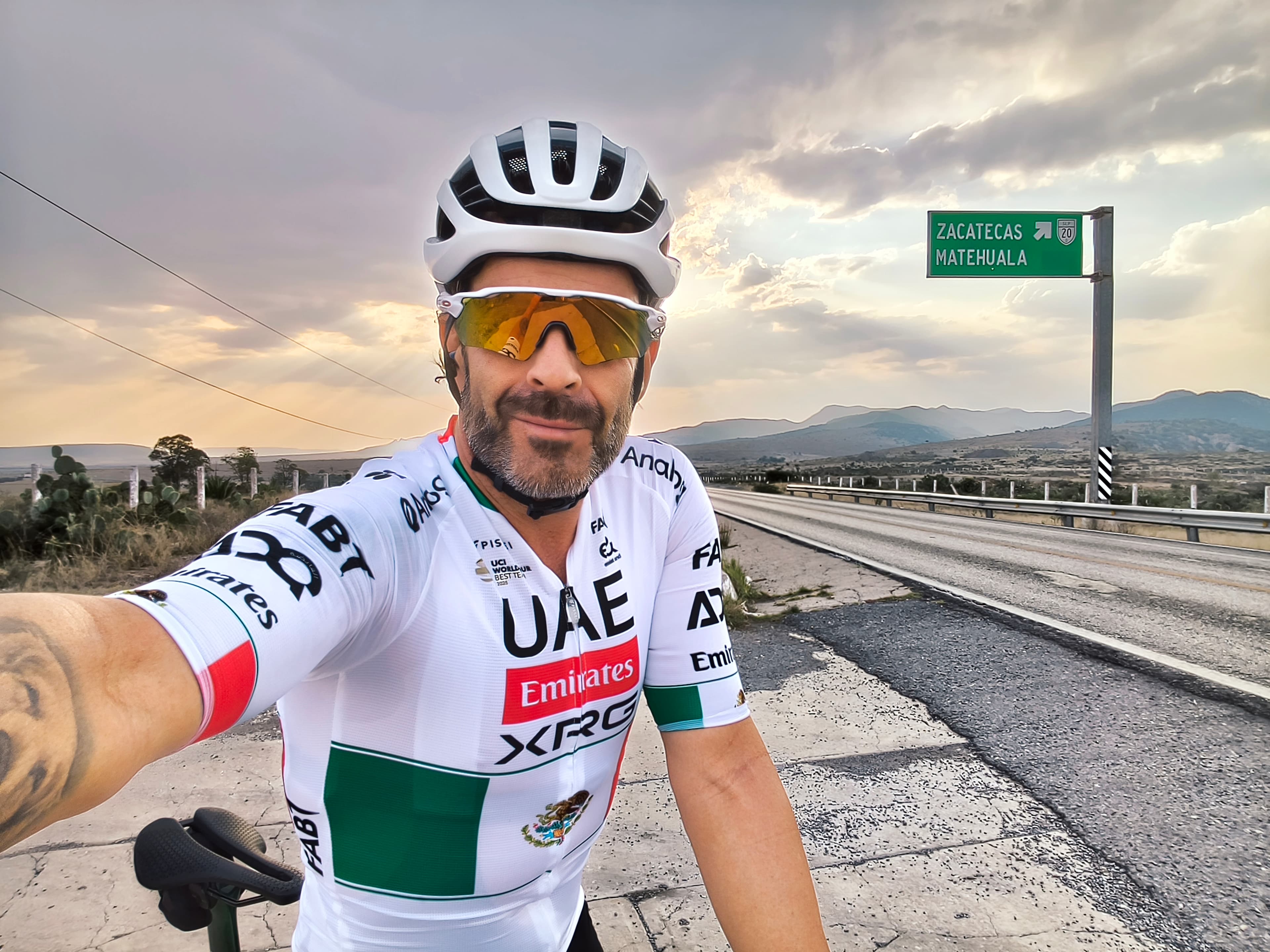
By the time Miguel rode seventeen continuous hours around Parque Tangamanga in San Luis Potosí, the challenge was no longer about endurance. It had become a message. He arrived at the park at 5:12 in the morning. He would not leave until 22:12 that night. He rode lap after lap around the perimeter of the park. His girlfriend Gaby, a nutritionist, waited beside the support car near the motocross track. The hours accumulated. The Mexican high plateau sits at 1,900 meters above sea level, and the morning heat became afternoon heat, and by hours nine and ten the temperature reached 35 degrees and something in his energy collapsed. He lost track of his nutrition protocol, chasing kilometers instead of calories. His mind went with his body. He looked at his watch and understood that seven hours remained. Gaby insisted he eat. Then he climbed back onto the bicycle. By the time the park began hosting athletic races in the evening, runners passing alongside his circuit, he was still riding. They cheered him. He didn’t know most of them. They cheered him anyway. The final count: 441 kilometers. Nearly 15 hours of uninterrupted pedaling. A total of 17 hours and 49 minutes from start to finish. The Reto Tangamanga was not a training exercise. It was the latest chapter of a campaign that had begun in Málaga and was now crossing the Atlantic. San Luis Potosí had a cycling community, a city with roads, and the same need for awareness that Málaga had. Miguel rode for 17 hours in a public park so that everyone who passed — on foot, on wheels, on a bicycle — would be confronted with what it looks like to share a road with someone whose life depends on the care of strangers. Mexico had come into his life through Gaby, who is from San Luis Potosí. He arrived as a visitor and stayed long enough to understand something he had not expected. It was not the altitude that changed him, though the altitude helped. It was the people. The warmth. The way strangers treated each other with patience and proximity. A culture that felt, he says, more human in certain ways than what he had known. He found a cycling community there, friends, a way of sharing the road that felt different from anything he had experienced before. Mexico gave him back the feeling that had first brought him to the bicycle — the sense of being somewhere fully, of belonging to a moment.
FOR THE MAESTRO
His father used to take him to watch the Subida a la Reina every 28th of February. He also came to watch Miguel race it, year after year, standing at the roadside with the family, his name painted on the asphalt in the tradition of all great European climbs. What his father loved most, at those races, was not seeing Miguel win. It was seeing the people around him. Seeing other riders come to greet him, to talk, to stay close. That, his father felt, said more about a person than any result. One year after his father died, Miguel was in a breakaway at a race. He told the riders around him what that day meant. That it was one year. That he would like to win and dedicate it. Among those riders was Raúl — at the time, the strongest cyclist in Andalusia, and one of the best in Spain. If the race came down to pure strength, it would go to Raúl. Instead, Raúl told Miguel something he had never said before. That when he was beginning to compete, Miguel had been his reference. That he remembered a race in Córdoba, years earlier, a breakaway in which Miguel had set a pace that had stayed with him. He said that day he was going to work to bring Miguel to the finish line. Miguel had almost forgotten that day in Córdoba. Raúl had not. They crossed the finish line together, and Miguel won. His father had always told him that what matters most is not what you achieve but who you are. Be a good person. Be humble. Respect everyone. Don’t pretend to be more than you are. The most important lesson he ever received, delivered not as a speech but as a way of moving through the world. Standing at that finish line, with a victory to give to someone who was no longer there, Miguel understood what his father had meant. Raúl had been watching a race in Córdoba years ago and remembered something. And that memory came back to Miguel exactly when it was needed most.
“What you leave in people without realizing it — that is what stays.”
Years later, Miguel revived and organized the Subida a la Fuente de la Reina for many years, returning to the calendar the race his father once brought him to watch as a boy. The event lives on today, preserving much of the identity and spirit with which he brought it back.
MALAGA
If a cyclist came to Málaga for the first time, Miguel would not take them to the most famous road or the most challenging climb. He would take them to understand what makes Málaga different: sea and mountain within the same morning’s ride. Coast and forest and medieval village and ancient climbing road, all within reach. He would take them up La Reina — not only for the suffering, but for what waits at the top. The bay of Málaga below. The Mediterranean extending southward. The whole world left behind at the bottom of the climb, looking small and far away and briefly manageable. That feeling — of being outside ordinary life for a moment, of looking down at the city from somewhere the city cannot reach — is not something Miguel can fully explain. He has only been able to return to it, again and again, for thirty years. La Reina is a rite of passage for every cyclist in Málaga. The climb begins at Fuente Olletas — practically from the city center — and rises for 16 kilometers to Puerto de León at 900 meters above sea level, through the Montes de Málaga Natural Park. The last three kilometers are the hardest. They arrive when the legs have least to offer. If France has its Alpe d’Huez, Málaga has the Fuente de la Reina. He would also show the Axarquía — the interior landscape of olive groves and white villages and quiet secondary roads. El Chorro and the Gaitanes gorge. El Torcal de Antequera. Ronda on its cliff above the Tajo. The Sierra de las Nieves, National Park and Biosphere Reserve.
“Málaga is not a single landscape. In very little space, it contains many worlds.”
THE ANSWER
When he returned to Málaga after months at altitude and rode the climbs he had known all his life, something had shifted. Times appeared on his watch that he had not seen in more than a decade. But the numbers were never really the point. What Mexico had given him was not watts or physiology. It was the rediscovery of a feeling. For years, that particular sensation — of the body responding, of being able to push and knowing the push would be answered — had been fading. What it took was a new place, new people, a new way of waking up in the morning and getting on a bicycle. He is forty-nine years old. He does not measure the value of a ride in kilometers alone. What matters to him is how he rode them — the honesty of the effort, the integrity of the time in motion. If he says he covered 500 kilometers, he wants that number to be true in a very specific sense. He has never been interested in racing against everyone else. The real comparison has always been with the rider he was yesterday.
“Mexico gave me altitude. Málaga is giving me the answer.”
THAT WAS ME
Miguel opened a bicycle shop. The kind of place where cyclists come to talk as much as to buy, where the conversation about a component can last an hour and nobody minds. One day a man walked in. They began talking about mountain biking and races the way people do in such places — slowly, going back in time, following threads that lead to other threads. And the man told him a story. About a rider at the Desafío del Buda, a long time ago. A crash a few kilometers from the finish. A collarbone that was clearly broken. A dislocated shoulder. A saddle that had snapped in the impact. And this rider — alone, without a phone, with the ambulance waiting at the finish line — getting back on the bicycle. Standing on the pedals over the dry riverbed. Crossing the finish line first. The man said he had been the doctor in that ambulance. He said he had driven the rider to the hospital and stayed until he was treated. He said he had never forgotten it. Something in Miguel’s expression changed. The man looked at him more carefully.
“That was me,” Miguel said.
The bicycle is not, for Miguel, simply a sport. It has taught him, he says, to look at the world with more calm. It makes distant places feel closer, and unfamiliar places feel human. It takes you somewhere, and then the people make it matter. The bicycle opens the door. What comes through is always a person. Every February 28th, somewhere on the road to La Reina, another child stands beside the road watching cyclists disappear into the mountains above Málaga. Miguel knows now what that boy cannot. Some things you leave in people without realizing it. And some things stay.
Meet a ZealZag Athlete
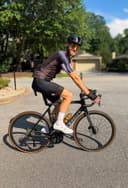
Keep reading
Cycling Barcelona: Montjuïc, the Seafront Stage 1 Route, and the Sitges Coast
A practical guide to riding the roads at the centre of the Tour de France's Grand Départ — Montjuïc's switchbacks, the seafront TTT course, and the 40-kilometre coastal run to Sitges that Stage 2 traces along the Costa Daurada.
Grand Départ Barcelona: The Tour Opens with Its First Team Time Trial Since 1971
Twenty-two squads rolled off the Parc del Fòrum ramp and pointed at Montjuïc on Saturday as the Tour de France opened its 2026 edition with a team time trial through the streets of Barcelona — a format not seen at a Tour Grand Départ since 1971, and one carrying an individual GC twist that made every second count.
Val d'Aran VDA 163K 2026: Europe's Biggest Mountain Ultra Is Running Now
The HOKA Val d'Aran by UTMB's flagship 163K race — Europe's biggest trail ultra and a direct qualifier to UTMB Mont-Blanc 2027 — departed Vielha at dawn this morning with 7,500 runners from 91 countries.
More athletes on the map
See all →